
More Than Income: How Selling Household Items Can Transform Slum Communities

By |2024-01-03T14:56:31+01:00February 12th 2019|Finance, Gender and Inequalities|

"LivelyHoods" forges economic opportunities for youth and women in Kenyan slums – while at the same time promoting clean energy. What are the project's success factors and what challenges does it face?

Youth Employment in Lagos, Nigeria: Challenges and Opportunities

By |2024-01-03T14:56:57+01:00February 7th 2019|Finance, Gender and Inequalities|

In Lagos, youth are believed to constitute about 50 per cent of the population, equalling over 10 million people. Facing high rates unemployment and an ever-growing population, decision-makers need to understand both the challenges and the opportunities that characterise youth employment in Lagos, argues Oje Ivagba

Rural-Urban Migration and Youth Unemployment in Nigeria: Why Public Programmes Fail

By |2024-01-03T14:57:17+01:00February 6th 2019|Gender and Inequalities, Good Governance|

With many young Nigerians relocating from rural to urban areas, unemployment is on the rise. Charles Ogheneruonah Eghweree and Festus Imuetinyan sketch out possible policy responses.

Creative Industries in South Africa: An Engine for Urban Regeneration

By |2024-01-02T18:40:12+01:00February 5th 2019|Finance, Integrated Planning|

The concept of “creative cities” enjoys widespread popularity. Oluwayemisi Adebola Oyekunle explains how the creative industries are contributing to urban revitalisation in South Africa.

Urban Regeneration After Catastrophe: The Fire at Omdurman Market

By |2024-01-02T18:40:33+01:00January 29th 2019|Finance, Integrated Planning|

After the failed response of the local government to the fire at Omdurman Market, it is time to think about an adequate urban regeneration plan that would boost local economic development in Omdurman City, says Khalafalla Omer.

Can Urban Planning Serve Local Economic Development?

By |2024-01-02T18:42:23+01:00January 15th 2019|Finance, Integrated Planning|

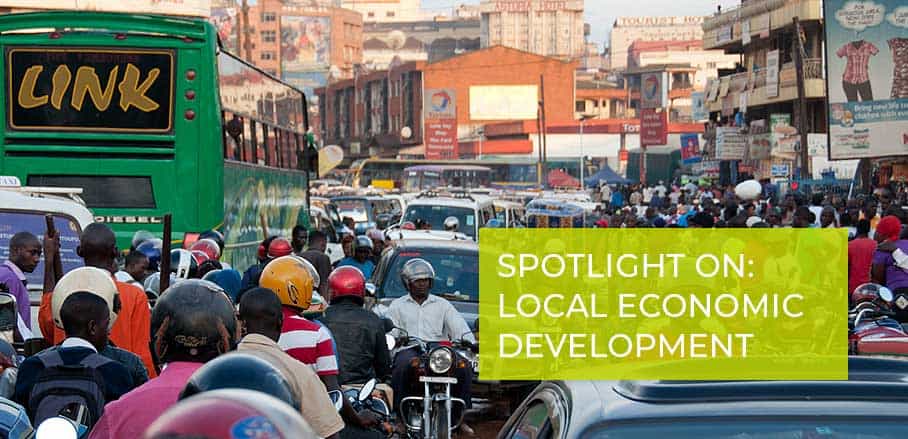
In Kampala, Uganda, the immensely fast rate of urbanisation makes it hard for urban planners to keep up with developments. Madina Guloba argues that this makes it more important than ever for sustainable urban planning to keep local economic development (LED) approaches in mind.
The Need for Radical Transformation: Climate Change Mitigation and Adaptation in Cape Town, South Africa

By |2024-01-02T18:47:25+01:00November 27th 2018|Resilient Cities and Climate|

It can no longer be denied that climate change has severe effects on our daily lives. As a response, the City of Cape Town has developed a policy that acknowledges climate change impacts as a pressing social and economic issue.

Casa Minha Nosso Bairro: Inclusive Urban Development in Maputo, Mozambique

By |2024-01-02T18:54:10+01:00November 8th 2018|Housing and Construction, Integrated Planning|

Projects aimed at the upgrading of settlements often face the question of how to increase living standards for all residents – while keeping housing costs at a level affordable for the original population. The initiative "Casa Minha Nosso Bairro" takes an innovative approach towards this issue, aiming at living conditions that nurture a peaceful living environment for all urban residents

Cape Town, South Africa: Building a Network of Street Enthusiasts

By |2024-01-02T18:55:20+01:00November 6th 2018|Integrated Planning, Sustainable Infrastructure|

What is the glue holding our cities together? Marcela Guerrero, co-founder and managing director at Open Streets Cape Town, believes that the answer lies in the streets. In an open exchange with others, the initiative is building a network of fellow street enthusiasts in the Global South.

Lagos: The Gaps Between Urban Policy and Urban Reality

By |2024-01-02T15:49:26+01:00October 30th 2018|Finance, Good Governance|

In Lagos, Nigeria, Public Private Partnerships (PPP) are common in urban planning projects. But whom do they benefit: people or profit? Dr Taibat Lawanson argues that the city's urban development strategy focusses too much on PPPs and thus favours profit over people – and calls to the state government to shift its focus back to a policy that benefits all citizens.

Urban Slums in Nigeria: Ensuring Healthy Living Conditions

By |2024-01-02T15:53:04+01:00October 25th 2018|Gender and Inequalities, Housing and Construction|

Many of Lagos’ residents live in informal settlements with no or limited access to basic services. With new immigrants arriving from rural areas every day, pressure increases on the already poor living conditions. Comprehensive action is needed to tackle interconnected social, environmental and health issues, says Olaoluwa Pheabian Akinwale.

Fostering Multilevel Governance: The Cities and Regions Talanoa Dialogues

By |2024-01-02T16:00:22+01:00September 25th 2018|Good Governance|

The Cities and Regions Talanoa Dialogues are a highly efficient tool towards achieving the goals set in the Paris Agreement. This can be seen in examples from Togo, the Philippines, Indonesia, South Africa, and Ecuador, writes Jisun Hwang from the ICLEI.

Policy Reform, not Evictions! The Case of Slum Urbanisation in Khartoum, Sudan

By |2024-01-02T16:00:54+01:00September 20th 2018|Good Governance, Housing and Construction|

A radical reform of Khartoum’s housing policy is required to improve the living conditions of slum dwellers. For this, we need to examine the socio-economic situation of the urban poor and of those who live in the city’s informal settlements.

The Lagos Water Crisis: Any Role for the Private Sector?

By |2024-01-02T15:09:19+01:00August 28th 2018|Good Governance, Sustainable Infrastructure|

Lagos is suffering from severe water shortage due to profit-oriented politics. Akinbode Oluwafemi points out the conflicts and problems around the privatisation of the water sector and offers alternative solutions for one of the world’s most populous cities.

Go to Top